Best Chef Knife for Home Use (2027): 6 Top Picks
If you only own one good knife, make it the best chef knife. It handles most of what happens on the cutting board: dicing onions, slicing chicken, mincing herbs, breaking down vegetables. A sharp, well-balanced one makes prep faster, safer and a lot more enjoyable.
The problem is choice. Prices run from the cost of a takeaway dinner to the cost of a weekend away, and the marketing language is the same across all of it. This guide narrows things down to six knives that suit home cooks, shows their real specifications side by side, and explains who each one is for and who should skip it.
The Short Answer
- One knife that does everything and lasts for years: Wüsthof Classic 8″
- Best on a budget, and the best first knife: Victorinox Fibrox Pro 8″
- Light, very sharp, not fragile: Mac Professional MTH-80
- Japanese steel without a big spend: Tojiro DP Gyuto 210 mm
- Best premium pick or gift: Shun Classic 8″
- Modern design with easy returns: Misen 8″
Quick Picks for Best Chef Knife for Home Use
| Best for | Knife | Style | Link |
|---|---|---|---|
| Best overall | Wüsthof Classic 8″ | German, forged | Check Latest Price |
| Best budget and best first knife | Victorinox Fibrox Pro 8″ | Swiss, stamped | Check Latest Price |
| Best lightweight all-rounder | Mac Professional MTH-80 | Japanese, bolstered | Check Latest Price |
| Best value Japanese | Tojiro DP Gyuto 210 mm | Japanese, layered steel | Check Latest Price |
| Best premium and gift | Shun Classic 8″ | Japanese, Damascus-clad | Check Latest Price |
| Best direct-to-consumer | Misen 8″ | Modern hybrid | Check Latest Price |
*Price tiers are rough US street prices at the time of writing and change often: $ is under about $75, $$ is about $75 to $160, $$$ is above about $160. Always check the retailer page for the current price.
How We Chose These Knives?
We started with the chef knives that home cooks and professional kitchens recommend most often, then narrowed the list using the same criteria for every knife:
- Edge and steel: the steel type, its hardness (Rockwell, or HRC) and the factory edge angle, where the maker publishes them.
- Weight and balance: how heavy the knife is and where it balances, since fatigue matters more than sharpness over a long prep session.
- Handle and comfort: shape, material and how well it suits a pinch grip.
- Care and durability: how forgiving it is of everyday mistakes and how often it needs attention.
- Warranty and availability: what the maker covers and how easy the knife is to buy and return.
- Value: what you get for the money compared with the alternatives at the same price.
This guide is based on manufacturer specifications, retailer listings and large volumes of verified owner feedback, which we cross-checked for consistency. It is a research-based comparison. We link to each maker’s own page so you can confirm details before you buy.
We update this page when models, specs or availability change. See the update log at the bottom.
Side-by-Side Comparison
| Wüsthof Classic | Victorinox Fibrox Pro | Mac MTH-80 | Tojiro DP Gyuto | Shun Classic | Misen 8″ | |
|---|---|---|---|---|---|---|
| Blade length | 200 mm (8″) | 200 mm (8″) | 200 mm (8″) | 210 mm (8.3″) | 200 mm (8″) | 203 mm (8″) |
| Weight | about 265 g | about 184 g | about 192 g | about 190 to 205 g | about 205 to 215 g | about 230 g |
| Steel | X50CrMoV15 (forged) | High-carbon stainless (stamped) | Molybdenum-vanadium | VG-10 core, stainless cladding | VG-MAX core, Damascus cladding | AUS-10 (newer version: ACUTO440) |
| Hardness (HRC) | 58 | Not published | 61 | about 60 | 60 to 61 | 58 (newer version 57 to 59) |
| Handle | Riveted synthetic | Textured TPE | Riveted Pakkawood, bolster | Western-style | D-shaped Pakkawood | Sloped-bolster handle |
| Made in | Germany | Switzerland | Japan | Japan | Japan | China |
| Care level | Low to medium | Low | Medium | Medium to high | Medium to high | Medium |
| Price tier | $$$ | $ | $$ | $$ | $$$ | $$ |
Weights vary slightly between retailer listings and production runs, so they are shown as approximate. Care level is our own editorial rating based on steel hardness and typical owner feedback.
1. Wüsthof Classic 8″ Chef’s Knife: Best Overall
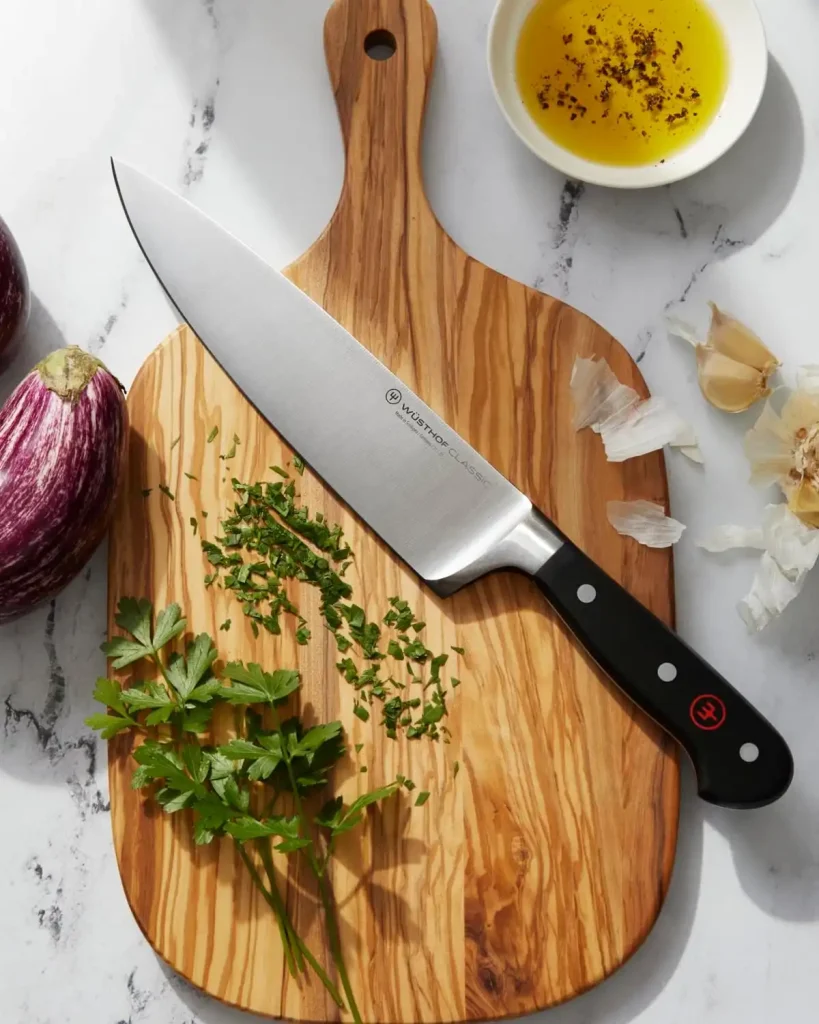
Best for: Cooks who want a durable, do-everything knife that holds up to daily use for years.
Key specs: Fully forged from a single piece of X50CrMoV15 steel, 58 HRC, about 14° edge angle per side, full bolster, triple-riveted handle, about 265 g, made in Solingen, Germany, lifetime warranty.
The Wüsthof Classic is the benchmark German chef knife. It is the heaviest knife in this guide, and that is deliberate: the weight and full bolster move the balance point toward the heel, which helps the blade power through carrots, squash and chicken joints with little effort. The curved belly suits the rocking motion most home cooks use naturally. Wüsthof also claims its edge process makes the blade noticeably sharper with longer edge retention (a manufacturer claim, not an independent result).
Pros
- Tough, forgiving edge that tolerates everyday abuse
- Comfortable, secure handle and a solid, confidence-inspiring feel
- Strong warranty and a long track record
- Easy to hone and sharpen at home
Cons
- Heaviest of the six, which tires some people during long prep sessions
- Costs noticeably more than entry-level options
- Softer steel than the Japanese picks, so it dulls sooner
Who should skip it: Anyone who prefers a light, thin blade for delicate slicing, or who is spending under about $100.
Verdict: If you want one knife to buy once and use for years, this is the safest choice.
2. Victorinox Fibrox Pro 8″ Chef’s Knife: Best Budget
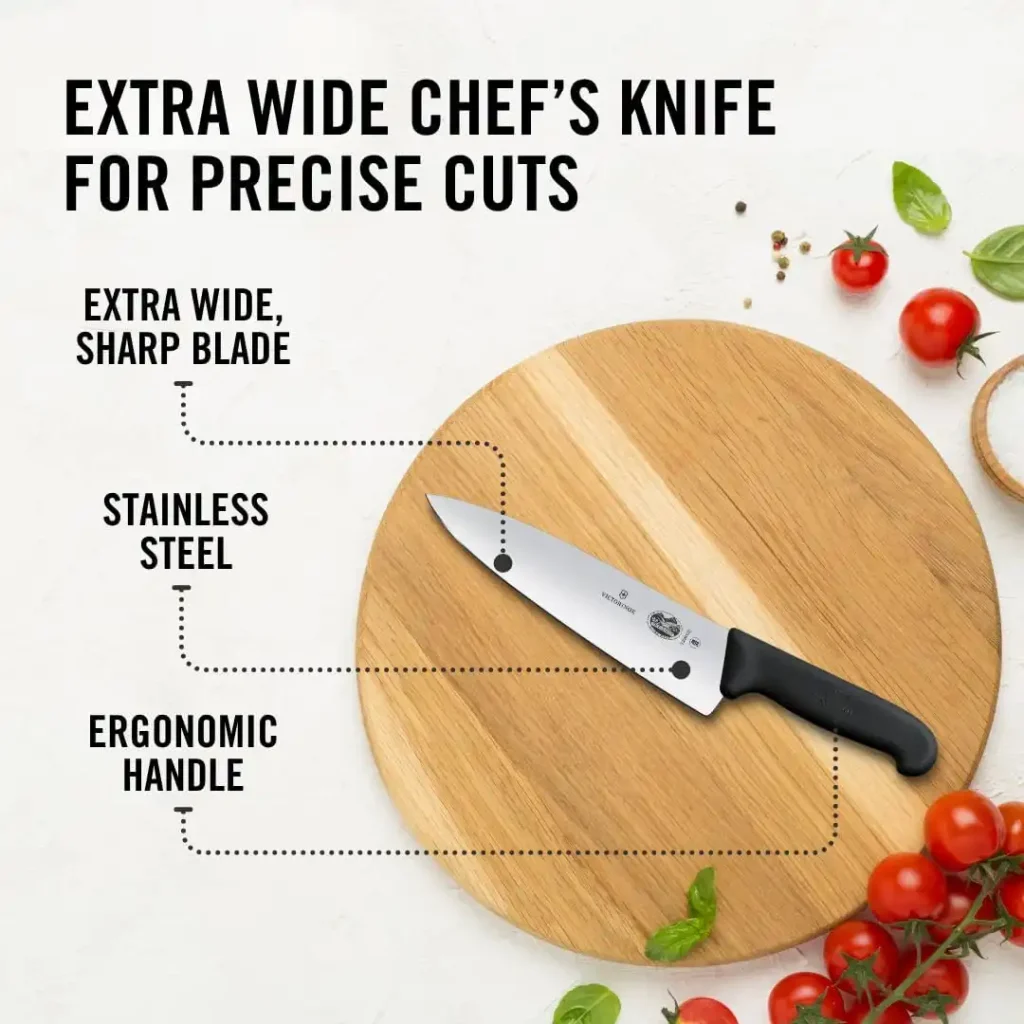
Best for: Anyone who wants strong performance without spending much, including beginners and anyone replacing a worn-out supermarket knife.
Key specs: Stamped high-carbon stainless blade, textured Fibrox (TPE) handle, about 184 g, made in Switzerland, lifetime warranty against defects. Victorinox does not publish a hardness figure.
This is the knife professional kitchens buy by the dozen, and it is also the one we point beginners toward. Because the blade is stamped rather than forged, the price stays low, yet the knife is light, sharp and easy to resharpen. The textured handle stays grippy even when wet or greasy.
Pros
- Outstanding performance for the price
- Among the lightest knives here, with a nimble, easy feel
- Slip-resistant handle
- Easy to sharpen, so it’s forgiving while you learn
Cons
- Plain looks and a plastic handle that feels less premium
- No bolster, so the balance feels different from German forged knives
- Edge retention is good, not exceptional
Who should skip it: Anyone who wants a polished heirloom piece or the heft of a forged, bolstered knife.
Verdict: The best way to get a genuinely good chef knife for a modest outlay. It also makes a great backup or a first knife for a student kitchen.
3. Mac Professional MTH-80 8″ Hollow Edge: Best Lightweight All-Rounder
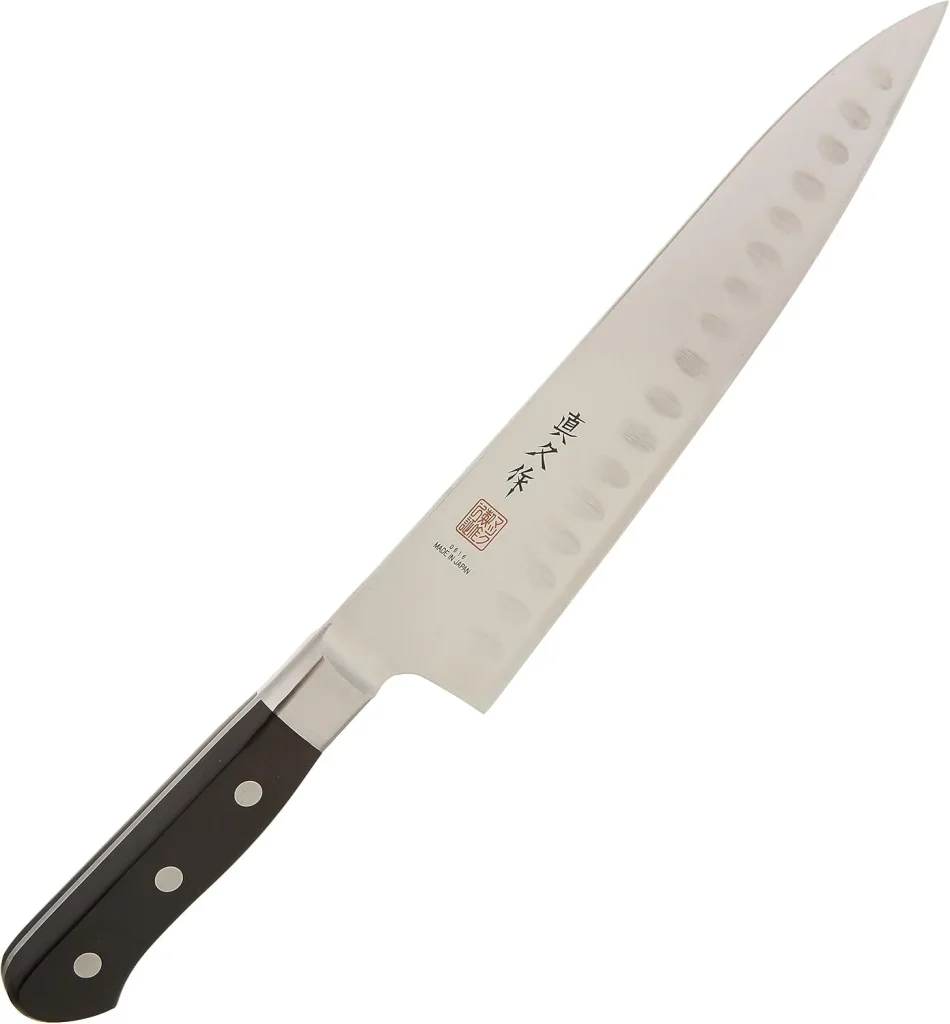
Best for: Cooks who want a light, very sharp knife without jumping to a delicate or expensive blade. It is also a good first Japanese-style knife.
Key specs: Molybdenum-vanadium steel, 61 HRC, 15° edge angle per side, hollow-edge dimples, riveted Pakkawood handle with bolster, about 192 g (6.8 oz), made in Japan, 25-year warranty.
Mac sits between German and Japanese design. The blade is thin and light, so slicing feels effortless, while the bolster keeps the knife balanced near the handle. The dimples (the “hollow edge”) reduce food sticking when you slice potatoes, apples or squash. If you want an even lighter knife, Mac’s Chef Series TH-80 drops the bolster and is a bit lighter again.
Pros
- Very sharp out of the box
- Light weight reduces fatigue
- Hollow edge helps food release
- Excellent slicing performance and a long warranty
Cons
- Thin blade needs more care around bones, frozen food and hard squash
- Harder steel is less forgiving of twisting or prying
- Costs more than the Victorinox
Who should skip it: People who regularly cut through bones or frozen food, or who want a heavy knife.
Verdict: A great pick if you want the “wow, this is sharp” experience in a light, balanced knife that is easy to live with.
Not sure which one fits you? Jump to the decision guide below.
4. Tojiro DP Gyuto 210 mm (8.3″): Best Value Japanese Knife
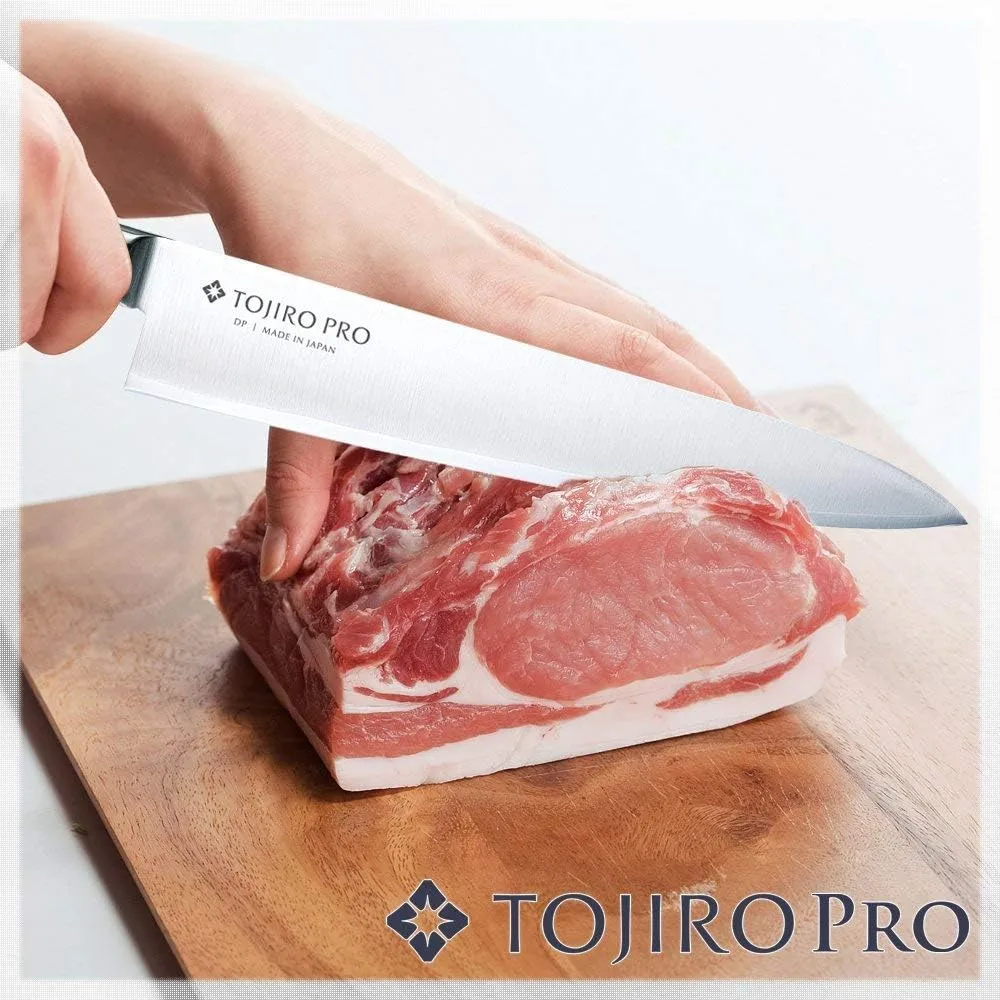
Best for: Cooks curious about Japanese knives who want real quality at a fair price.
Key specs: 210 mm (8.3″) blade, VG-10 steel core with 13-chrome stainless cladding (san-mai construction), about 60 HRC, roughly 190 to 205 g depending on version, Western-style handle, made in Japan. Note that this blade is slightly longer than the 8″ (200 mm) knives in this guide.
The Tojiro DP uses a hard VG-10 core protected by softer stainless cladding, which gives a very sharp edge that lasts, with decent corrosion resistance. The gyuto is the Japanese take on the chef knife: a flatter profile that rewards a push-cut or slicing style over heavy rocking.
Pros
- Hard steel holds an edge longer than the German picks
- Excellent price-to-quality ratio
- Light and precise
- Clean, classic look
Cons
- Flatter blade takes some adjustment if you rock-chop
- Harder steel can chip if misused
- Some owners mention sharp spine and choil corners that they round off themselves
- Availability and handle details vary between retailers, so check the exact version
Who should skip it: Cooks who want a low-maintenance, tough knife, or who rock-chop everything.
Verdict: One of the best ways to experience Japanese steel without a big spend, as long as you’re willing to treat it with a little care.
5. Shun Classic 8″ Chef’s Knife: Best Premium Pick and Gift
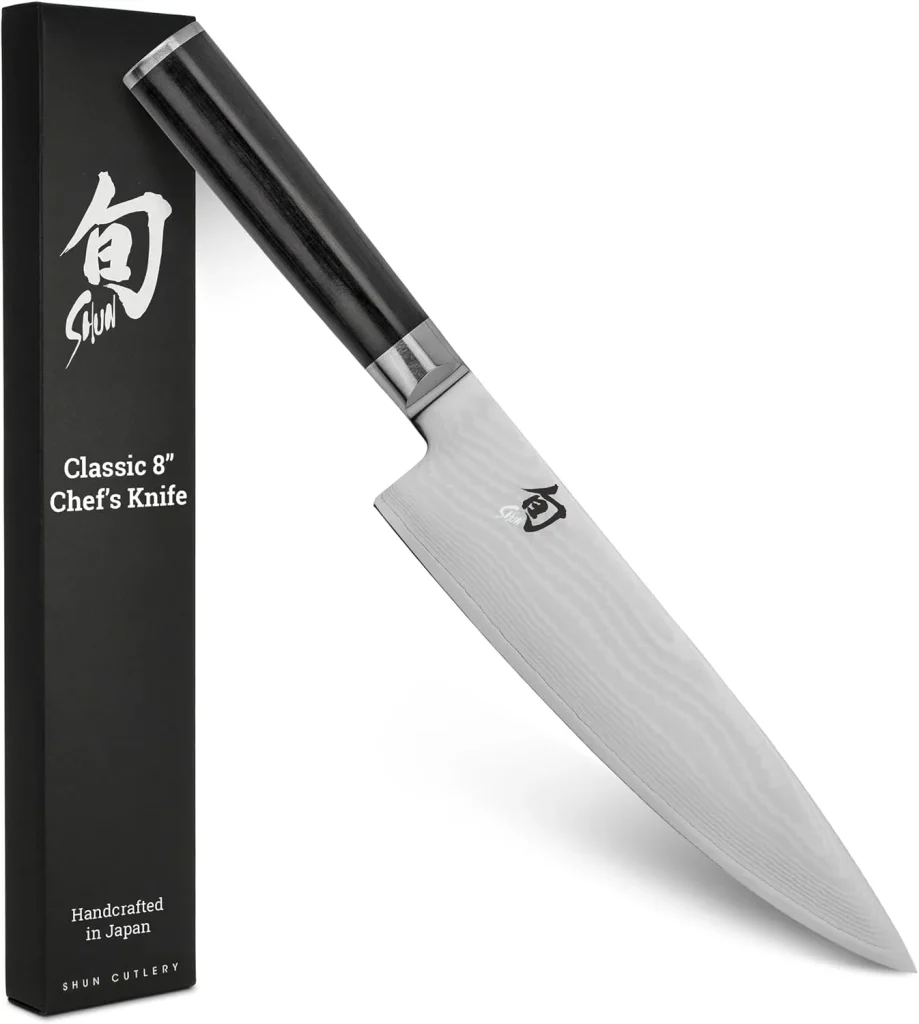
Best for: Cooks who want a beautiful, razor-sharp knife and are happy to pay for it.
Key specs: VG-MAX core with 34-layer Damascus-style cladding on each side, 60 to 61 HRC, 16° edge angle per side, D-shaped PakkaWood handle, about 205 to 215 g, made in Seki, Japan, limited lifetime warranty.
The Shun Classic pairs very hard steel with a rippled Damascus-style finish and a smooth, contoured handle. The edge is thin and extremely keen, and the knife is as nice to look at as it is to use. It also makes a standout gift.
Pros
- Exceptional sharpness and edge retention
- Gorgeous finish and a comfortable, polished handle
- Great for precise slicing and fine prep
- Limited lifetime warranty
Cons
- Premium price
- Hard steel at a 16° edge can chip if twisted or used on bones
- Needs careful handling, washing and storage
- The D-shaped handle is shaped with right-handed users in mind, so left-handed cooks should check for a suitable version first
Who should skip it: Anyone who is rough on knives or who is choosing a first knife. If you like the Shun look but want a sturdier edge, Shun also sells a Classic Western version with a wider 22° edge angle.
Verdict: A luxurious option for cooks who value precision and presentation and will look after it.
6. Misen 8″ Chef’s Knife: Best Direct-to-Consumer Option
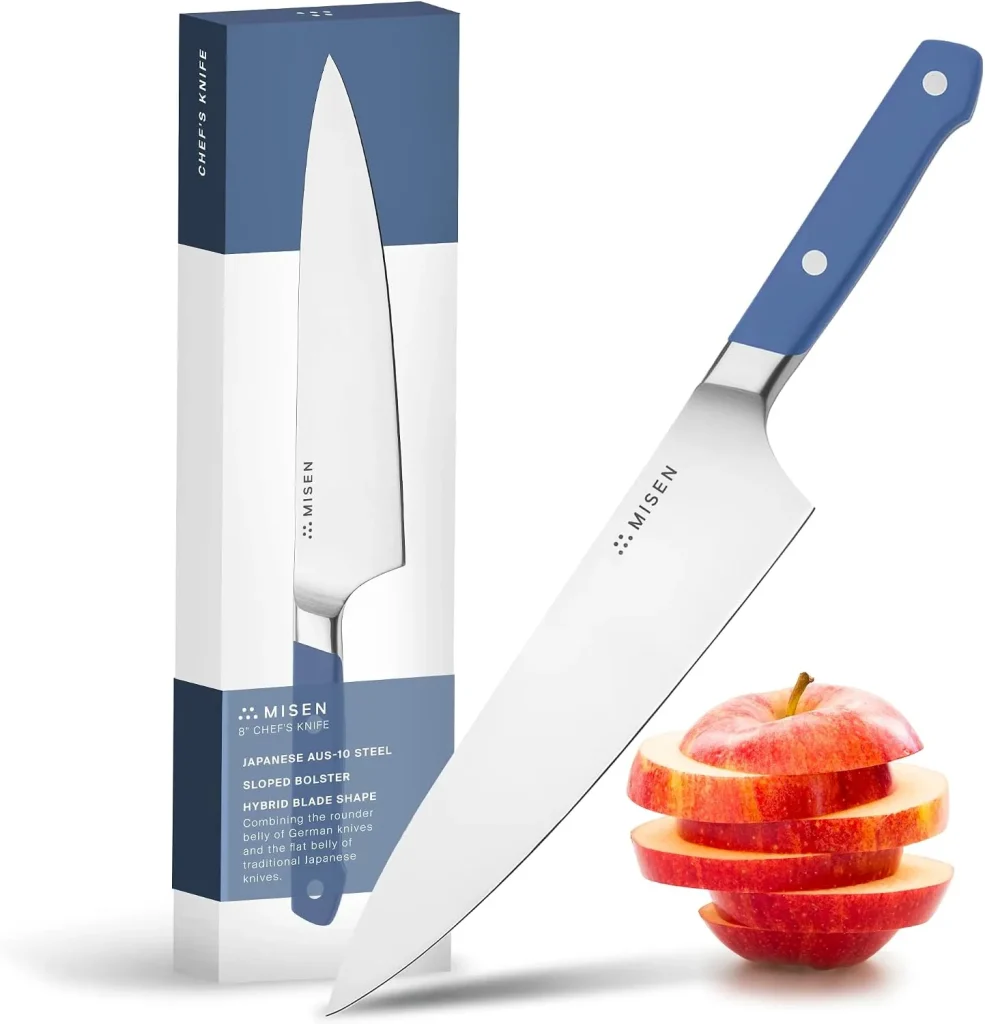
Best for: Shoppers who want a modern, well-balanced knife and easy returns, without paying for a big-brand name.
Key specs: Original version: AICHI AUS-10 steel, 58 HRC, 15° edge angle per side, 203 mm blade, about 230 g, sloped bolster. Newer “2.0” version: ACUTO440 steel, 57 to 59 HRC, 14° per side, 210 mm blade, rounded spine, about 230 g. Made in China (Misen lists the country of production), lifetime warranty against defects.
Misen sells direct to the customer to keep prices down. The knife is a 50/50 symmetrical grind with a sloped bolster designed for a comfortable pinch grip, and it works well for both rocking and slicing. Misen currently sells two versions, so check which one your link goes to and which spec sheet applies. Misen also advertises a test-drive period with free returns on its knife pages, which lowers the risk of buying unseen (check the current terms).
Pros
- Strong performance and comfort for the price
- Works with rocking and slicing styles
- Easy returns and a lifetime defect warranty
- Large volume of verified owner reviews
Cons
- Made in China, which matters to some buyers
- Two versions on sale at once, which can confuse buyers
- Newer brand without the decades-long track record of Wüsthof or Victorinox
- Less prestige if you are buying a gift
Who should skip it: Buyers who want a Japanese or German manufacturing pedigree, or who are shopping for a traditional gift.
Verdict: A smart middle path between budget and premium if you like buying direct and want returns to be painless.
Which Chef Knife Should You Buy?
| If you… | Choose |
|---|---|
| Want one tough knife for everything and don’t baby your gear | Wüsthof Classic |
| Are new to cooking, on a tight budget, or need a backup | Victorinox Fibrox Pro |
| Want something light and very sharp but not fragile | Mac MTH-80 |
| Are curious about Japanese steel and want value | Tojiro DP Gyuto |
| Want a showpiece or a gift | Shun Classic |
| Like buying direct, with easy returns | Misen |
How to Choose a Chef Knife: Buying Guide?
German vs. Japanese Style
| German style | Japanese style | |
|---|---|---|
| Weight | Heavier | Lighter |
| Blade | Thicker, more curved belly | Thinner, flatter profile |
| Steel | Softer, tougher | Harder, holds an edge longer |
| Best for | Heavy-duty, all-purpose prep, rocking cuts | Precise slicing, push cuts, fine work |
| Maintenance | Hone often, sharpen occasionally | Sharpen carefully, avoid abuse |
If you’re unsure, German-style is more forgiving. Japanese-style rewards a lighter touch. Several of our picks (Mac, Misen) sit somewhere in between.
Steel and Hardness, Explained
Hardness is measured on the Rockwell (HRC) scale. In this guide it ranges from about 58 (Wüsthof, Misen) to about 61 (Mac). Harder steel generally holds a sharp edge longer but is more likely to chip if twisted, dropped or used on bones. Softer steel is tougher and easier to touch up, but it dulls sooner. Neither is “better”; it depends on how you cook and how you treat your knives.
Blade Length
- 6 inches: Good for small hands or small kitchens, but limited on big items
- 8 inches (about 200 mm): The standard and the best choice for most home cooks
- 10 inches: Better for large volumes, but unwieldy at home
Handle and Balance
Pick the knife that feels comfortable in your hand. Most good chef knives balance near where the blade meets the handle, so they feel neutral rather than front- or back-heavy. If you can, hold a few in a store before buying online.
Forged vs. Stamped
Forged blades are shaped from a single piece of heated steel and are typically heavier, with a bolster. Stamped blades are cut from a sheet, are lighter and cheaper, and can still perform brilliantly (the Victorinox is proof). Don’t assume forged is always better.
Budget
- Under about $75: Victorinox-style stamped knives deliver excellent value
- About $75 to $160: The sweet spot for most home cooks
- Above about $160: Premium finishes, harder steel and refined fit and finish
How to Use Your Chef Knife Properly?
A great knife still needs good technique.
- Use a pinch grip. Pinch the blade just ahead of the handle between thumb and forefinger, and wrap your other fingers around the handle. This gives much better control than gripping only the handle.
- Curl your guide hand into a claw. Tuck your fingertips back and let your knuckles guide the blade.
- Match the cut to the knife. Rocking suits curved German-style blades. Push-cuts and slicing suit flatter Japanese-style blades.
- Let the knife do the work. A sharp blade needs guidance, not force.
How to Care for Your Chef Knife?
- Hand wash and dry immediately. Most makers recommend hand washing. Victorinox rates its Fibrox knives as dishwasher safe, but heat, detergent and banging around still wear any edge down faster.
- Use a wooden or soft plastic cutting board. Glass, stone and ceramic surfaces dull edges quickly.
- Hone between sharpenings. Softer steel (Wüsthof, Victorinox) responds well to a steel honing rod. For harder Japanese steel (Mac, Tojiro, Shun), a fine ceramic rod is generally the safer choice.
- Sharpen a few times a year with whetstones or a quality guided sharpener, or use a professional service. How often depends on use and steel.
- Store it safely. Use a knife block, magnetic strip or blade guard, not a crowded drawer.
Common Mistakes to Avoid
- Cutting through bones, frozen food or hard shells with a thin Japanese-style blade
- Scraping food off the board with the sharp edge (flip the knife and use the spine)
- Leaving the knife wet or in the sink
- Twisting or prying with the tip
- Waiting until the knife is truly dull to sharpen it
Frequently Asked Questions
Final Thoughts
You don’t need a drawer full of knives, just one that fits your hand and your cooking style.
- Want the best all-rounder? Go with the Wüsthof Classic.
- Watching your budget, or buying your first good knife? Grab the Victorinox Fibrox Pro.
- Prefer something light and very sharp? Try the Mac MTH-80 or the Tojiro DP Gyuto.
- Want a showpiece or a gift? The Shun Classic is the one.
- Like easy returns and direct buying? Look at the Misen.
The above article explains Best Chef Knife for Home Use and you can decide according to your choice and requirements.