Best Knife Sharpener for Home Cooks: 5 Picks Worth Considering
A good kitchen knife makes everyday cooking easier. It slices tomatoes without crushing them, cuts through onions cleanly and handles meal prep without making you work harder than necessary. But even a quality knife becomes frustrating to use when its edge starts to dull.
That is where a reliable and best knife sharpener comes in.
The challenge is choosing the right one. Some sharpeners are designed for quick results with very little effort, while others give you more control but take time to learn. You will also find compact manual sharpeners, electric machines, traditional whetstones and newer rolling systems.
So, which one makes sense for an ordinary home kitchen?
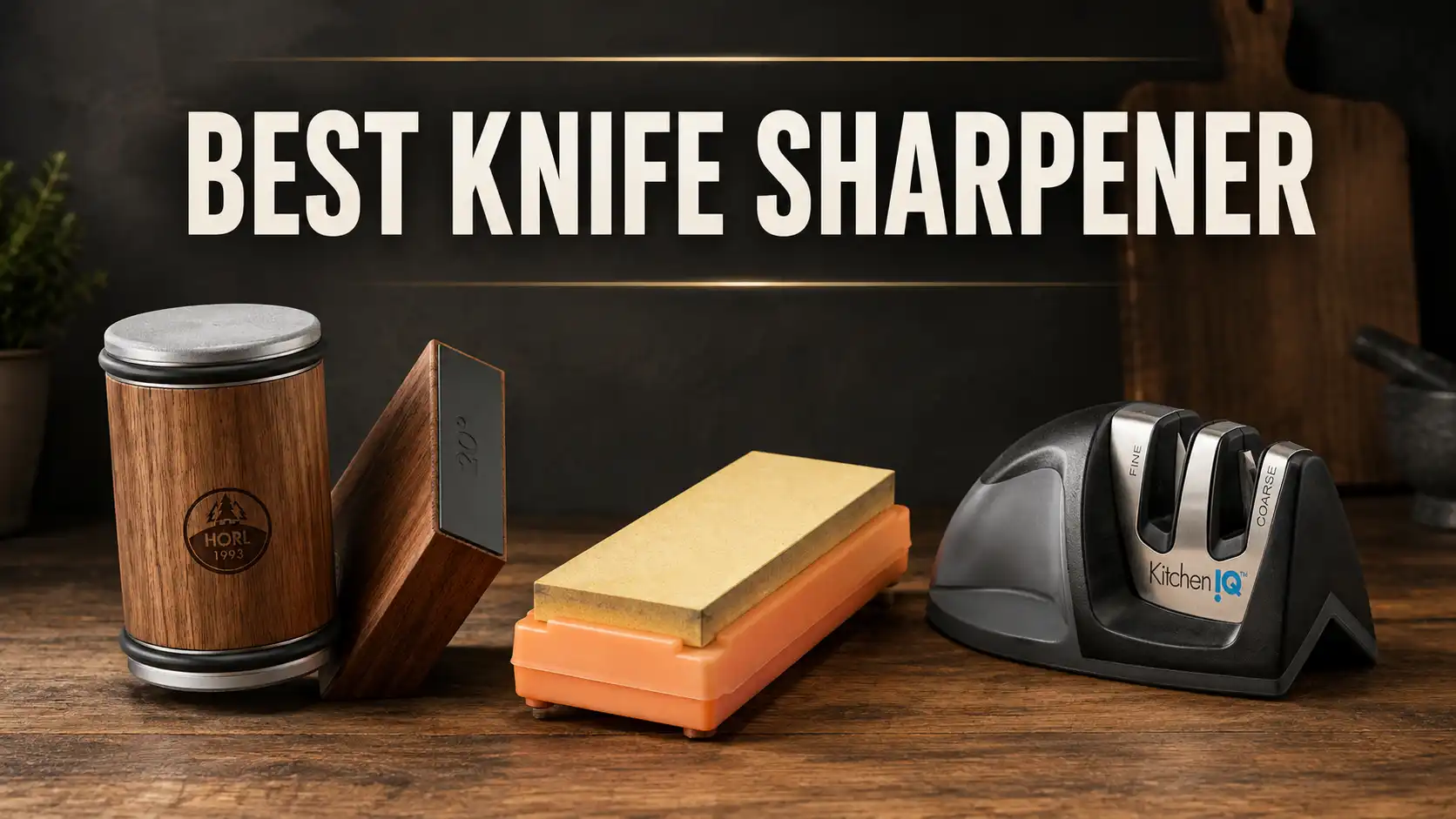
For most people who want convenience, the Chef’sChoice 15XV is a strong electric option to consider. If you prefer a simpler and more compact electric system, look at the Work Sharp Culinary E2. On a tighter budget, the KitchenIQ Edge Grip 2-Stage is worth considering. People who enjoy learning traditional sharpening may prefer the Shapton Kuromaku 1000, while the HORL 3 offers a guided rolling approach.
This guide compares all five, explains where each one fits and covers a few things to check before buying. It is based on product specifications, manufacturer information and published product reviews—not personal hands-on testing of every sharpener.
Quick Picks: The Best Knife Sharpener for Home Cooks
| Sharpener | Best for | Sharpening style |
|---|---|---|
| Chef’sChoice 15XV Trizor XV | Best overall electric option | Electric |
| Work Sharp Culinary E2 | Simple electric sharpening | Electric |
| KitchenIQ Edge Grip 2-Stage | Budget-friendly sharpening | Manual pull-through |
| Shapton Kuromaku 1000 | Learning traditional sharpening | Whetstone |
| HORL 3 | Guided rolling sharpening | Manual rolling |
A quick note: These products do not all work in the same way. A whetstone gives you more control but requires practice. An electric sharpener is generally more convenient, while a manual pull-through model is usually simpler and less expensive. The best choice depends on your knives, budget and how involved you want to be in maintaining them.
1. Chef’sChoice 15XV Trizor XV – Overall Electric Best Knife Sharpener
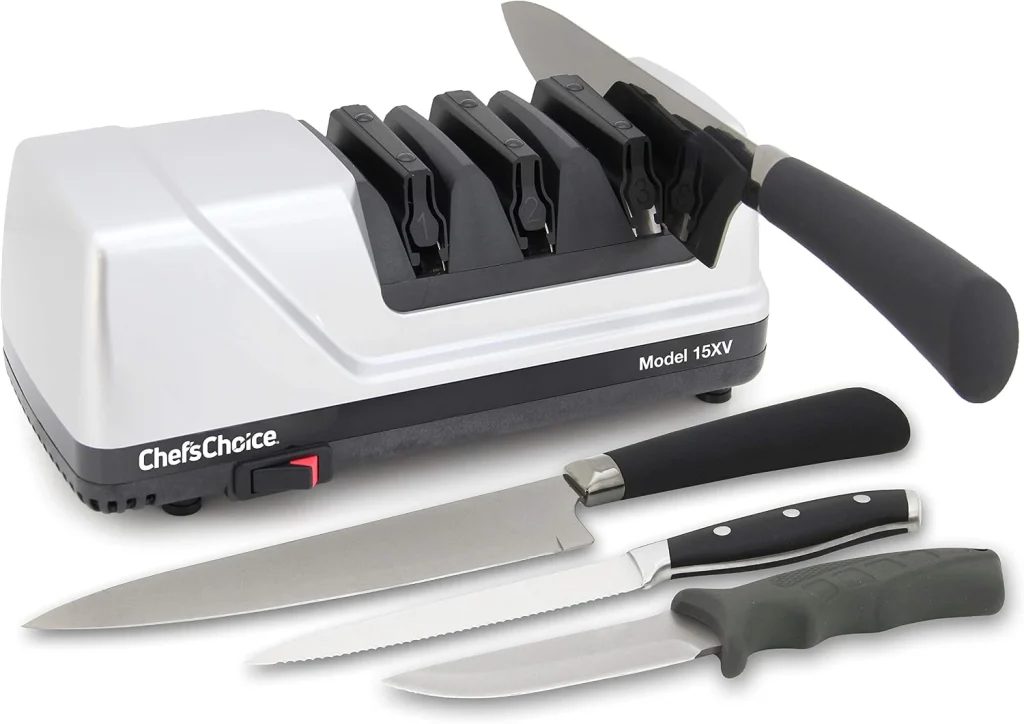
Best for: Home cooks who want an electric sharpener with guided sharpening and minimal technique.
If you regularly cook at home and do not want to spend time learning whetstone techniques, the Chef’sChoice 15XV is one of the first models worth looking at. It is a three-stage electric sharpener designed to create and maintain a 15-degree Trizor XV edge.
One of its main features is its ability to convert compatible traditional 20-degree factory edges to a 15-degree edge. It also sharpens and refines knives that already have a compatible 15-degree edge.
The three-stage system uses diamond abrasives to shape and sharpen the edge, followed by a polishing stage. Built-in guides help keep the blade at a consistent angle as you move it through the sharpener.
What makes it worth considering?
The main attraction is convenience. You do not have to estimate the sharpening angle by hand or learn how to maintain a consistent angle on a stone. The guided slots help make the process more repeatable.
The three-stage design also gives you more than a basic pull-through sharpener. It is intended to shape the edge, refine it and finish the blade.
For someone who cooks regularly and wants a dedicated electric machine, that combination can be appealing.
Pros
- Three-stage electric sharpening system
- Diamond abrasives
- Guided sharpening helps maintain a consistent angle
- Can sharpen compatible straight-edge and serrated knives
- Suitable for people who prefer a less hands-on process
Cons
- Costs more than basic manual sharpeners
- Takes up counter or storage space
- Changes compatible 20-degree edges to a 15-degree edge
- Not the right choice for every specialty or single-bevel knife
Who should buy it?
Consider the Chef’sChoice 15XV if you own ordinary Western-style kitchen knives and want a convenient electric sharpening system. It may be particularly useful if you regularly prepare meals and prefer not to sharpen by hand.
However, check the compatibility guidance before using it. If you own Japanese knives with a different edge geometry, single-bevel blades or expensive specialty knives, do not assume this sharpener is suitable for them.
Our take: A strong option for convenience-focused home cooks, provided the 15-degree edge is appropriate for their knives.
2. Work Sharp Culinary E2 – Best for Simple Electric Sharpening
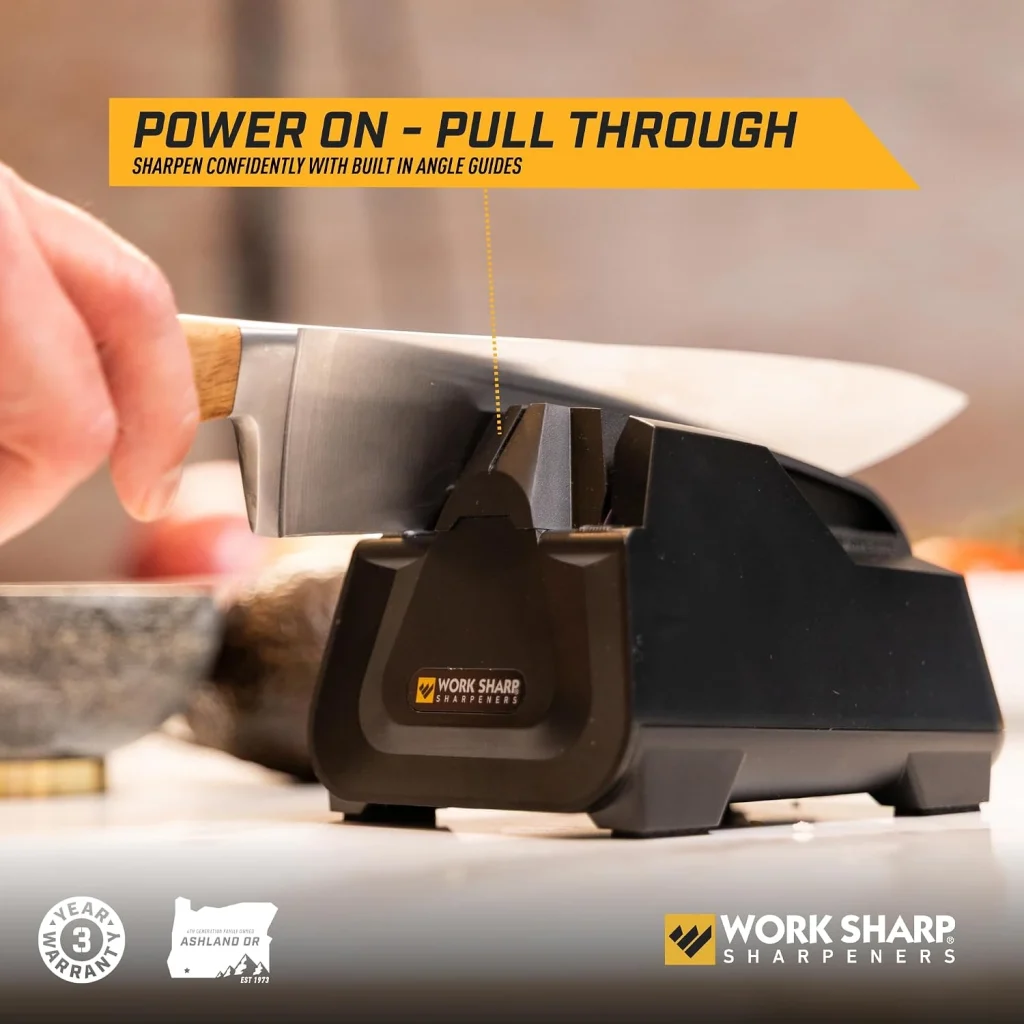
Best for: Beginners who want an electric system without a complicated setup.
The Work Sharp Culinary E2 takes a different approach to electric sharpening. It is designed to make routine kitchen knife maintenance easier, with a compact design and a guided sharpening process.
Rather than using the same style of sharpening wheels found in some traditional electric machines, this model uses flexible abrasive discs. It also includes a ceramic honing wheel for refining the edge after sharpening.
The guided design helps reduce guesswork, which is useful if you have never sharpened a kitchen knife before.
What makes it worth considering?
Its biggest selling point is simplicity. You do not need to become an experienced sharpener to understand the basic process. The system is designed to handle everyday kitchen knives with less manual effort.
The replaceable abrasive discs are another practical detail. Work Sharp provides replacement abrasives, so you do not necessarily need to replace the entire machine when the discs wear out.
The manufacturer also lists a three-year warranty for its current Kitchen Electric Best Knife Sharpener.
Pros
- Compact electric design
- Flexible ceramic abrasive discs
- Built-in ceramic honing wheel
- Guided sharpening process
- Replaceable abrasive discs
Cons
- Less control than a traditional whetstone
- Requires electricity
- Replacement abrasives add to long-term ownership costs
- Buyers should check compatibility before using it on specialty blades
Who should buy it?
The Work Sharp E2 is worth considering if you want a relatively straightforward electric sharpener for everyday kitchen knives. It makes sense for people who value convenience and do not want to spend much time learning sharpening techniques.
It is not necessarily an upgrade over every other electric sharpener. If you want a three-stage system specifically designed to convert compatible 20-degree edges to 15 degrees, the Chef’sChoice 15XV serves a different purpose.
Our take: A practical choice for beginners who want a compact electric sharpener and a simple sharpening routine.
3. KitchenIQ Edge Grip 2-Stage – Best Budget Manual Knife Sharpener
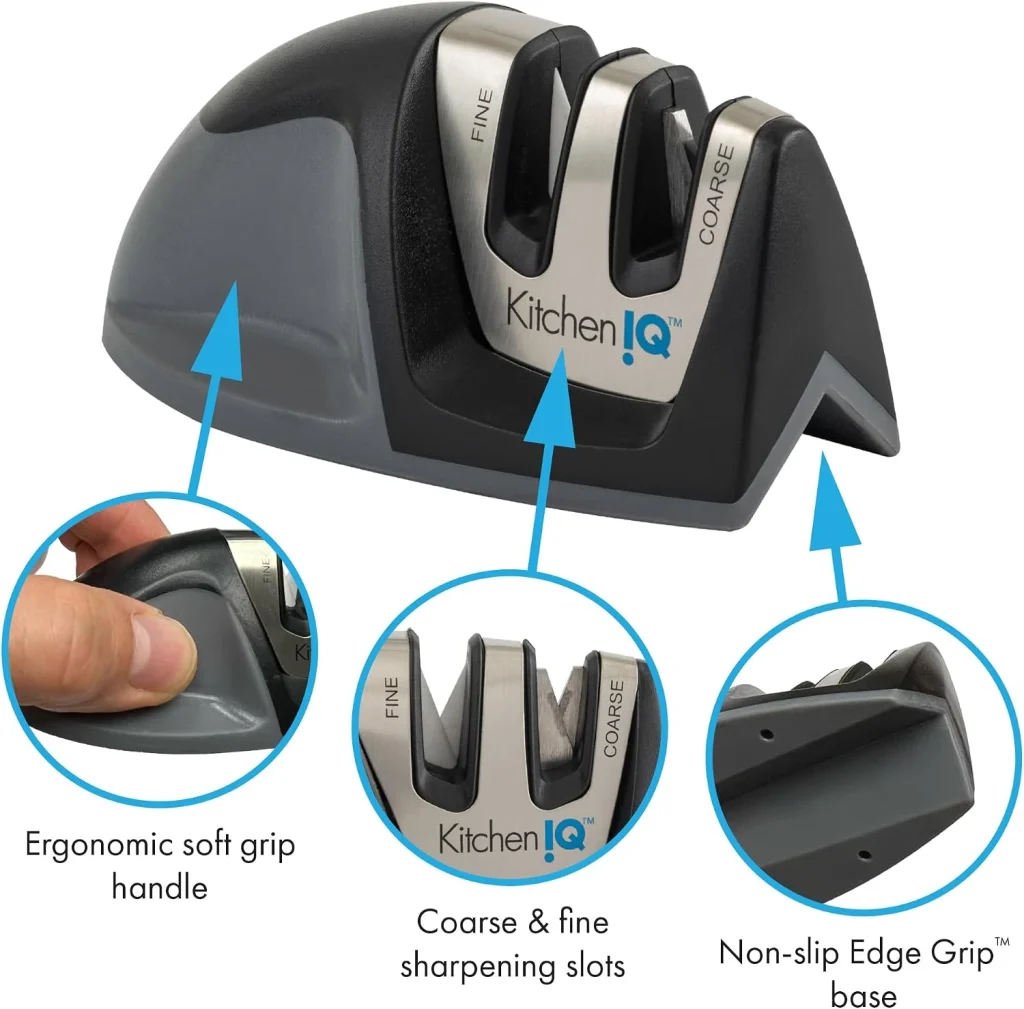
Best for: People who want a basic, affordable sharpener for everyday kitchen knives.
Not everyone needs an electric machine or a traditional sharpening stone. If you simply want a compact tool for occasional kitchen knife maintenance, a manual pull-through sharpener may be enough.
The KitchenIQ Edge Grip 2-Stage is designed around a straightforward two-stage process. One stage is used for sharpening, while the other helps refine the edge.
Its compact design is also convenient for smaller kitchens. You can store it in a drawer instead of keeping a larger electric machine on the counter.
What makes it worth considering?
The appeal is its simplicity and relatively low cost. There is no motor, electrical connection or complicated setup. You place the sharpener on a suitable surface, hold it securely and follow the manufacturer’s instructions.
For someone who only needs to maintain a few everyday kitchen knives, that may be all they want.
The Edge Grip design is intended to provide a more stable way to hold the sharpener near the edge of a counter. Even so, you should always follow the safety instructions and make sure the tool is secure before drawing a knife through it.
Pros
- Simple two-stage design
- Compact and easy to store
- No electricity required
- Generally more affordable than electric and rolling systems
- Straightforward option for basic kitchen maintenance
Cons
- Less control over the sharpening process
- Not ideal for every blade shape or edge geometry
- Pull-through sharpeners may remove more material than necessary if used too often
- Not a substitute for a more specialized sharpening system
Who should buy it?
Consider this model if you have ordinary kitchen knives, a limited budget and a preference for simple maintenance. It is a reasonable starting point for someone who does not want to invest in an electric sharpener or learn to use a whetstone.
If you own high-end Japanese knives, single-bevel knives or blades with unusual sharpening requirements, check compatibility first. A basic pull-through sharpener is not automatically suitable for every knife.
Our take: A budget-friendly option for basic kitchen use, but not the most versatile choice in this guide.
4. Shapton Kuromaku 1000 – Best Whetstone for Home Cooks
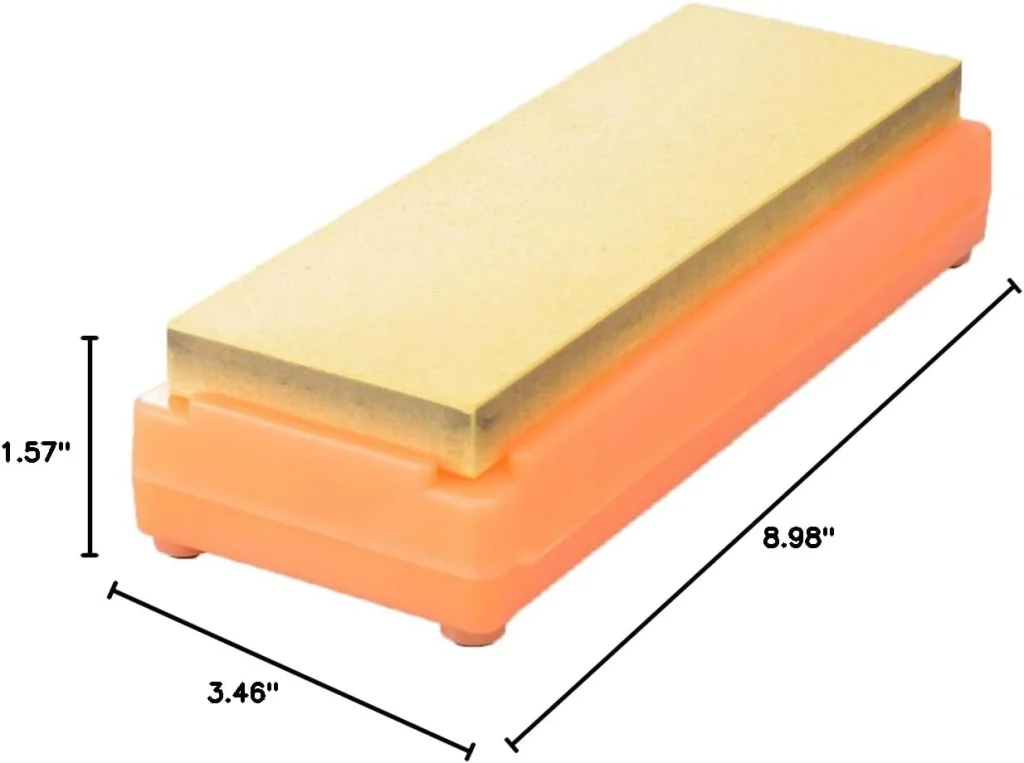
Best for: People who want more control and are willing to learn traditional sharpening.
A whetstone is different from an electric or pull-through sharpener. Instead of passing a knife through fixed guides, you move the blade across an abrasive stone while maintaining a suitable angle.
That takes practice, but it also gives you more control over the sharpening process.
The Shapton Kuromaku 1000 is a popular option in the brand’s professional stone range. Its 1000-grit surface is intended for regular sharpening and moderate steel removal. It is a useful starting point for restoring an edge that has become dull through normal kitchen use.
Shapton’s own guidance recommends its Orange 1000 stone for normal household knives. The company also identifies the Blue 1500 as an option for people who intend to use just one stone.
What makes it worth considering?
The biggest advantage is control. You are not limited to the fixed sharpening slots of a pull-through tool. With the right technique, you can work on the edge of a knife more deliberately.
The 1000-grit stone is also a practical starting point for routine sharpening. You do not necessarily need a large collection of stones to maintain ordinary kitchen knives.
However, technique matters. You need to maintain a consistent angle, use appropriate pressure and work safely. A stone can produce a good edge, but it will not do the work correctly on its own.
Pros
- Gives the user more control over sharpening
- Suitable for regular kitchen knife maintenance
- Manufacturer-recommended grit for household knives
- No electric motor or complicated machine
- Can be part of a longer-term sharpening setup
Cons
- Requires practice and patience
- Sharpening takes more involvement than using an electric model
- The stone needs proper care and may require flattening over time
- Beginners may need time to develop a consistent technique
Who should buy it?
The Shapton Kuromaku 1000 is a good option if you enjoy learning how things work and want more involvement in maintaining your knives. It can also suit people who own better-quality kitchen knives and want to learn a more controlled sharpening method.
If you want the simplest possible solution, however, a whetstone may feel like unnecessary work. An electric sharpener is likely to be easier for occasional maintenance.
Our take: A worthwhile choice for home cooks who want to learn traditional sharpening instead of relying entirely on a machine.
5. HORL 3 – Best Rolling Knife Sharpener
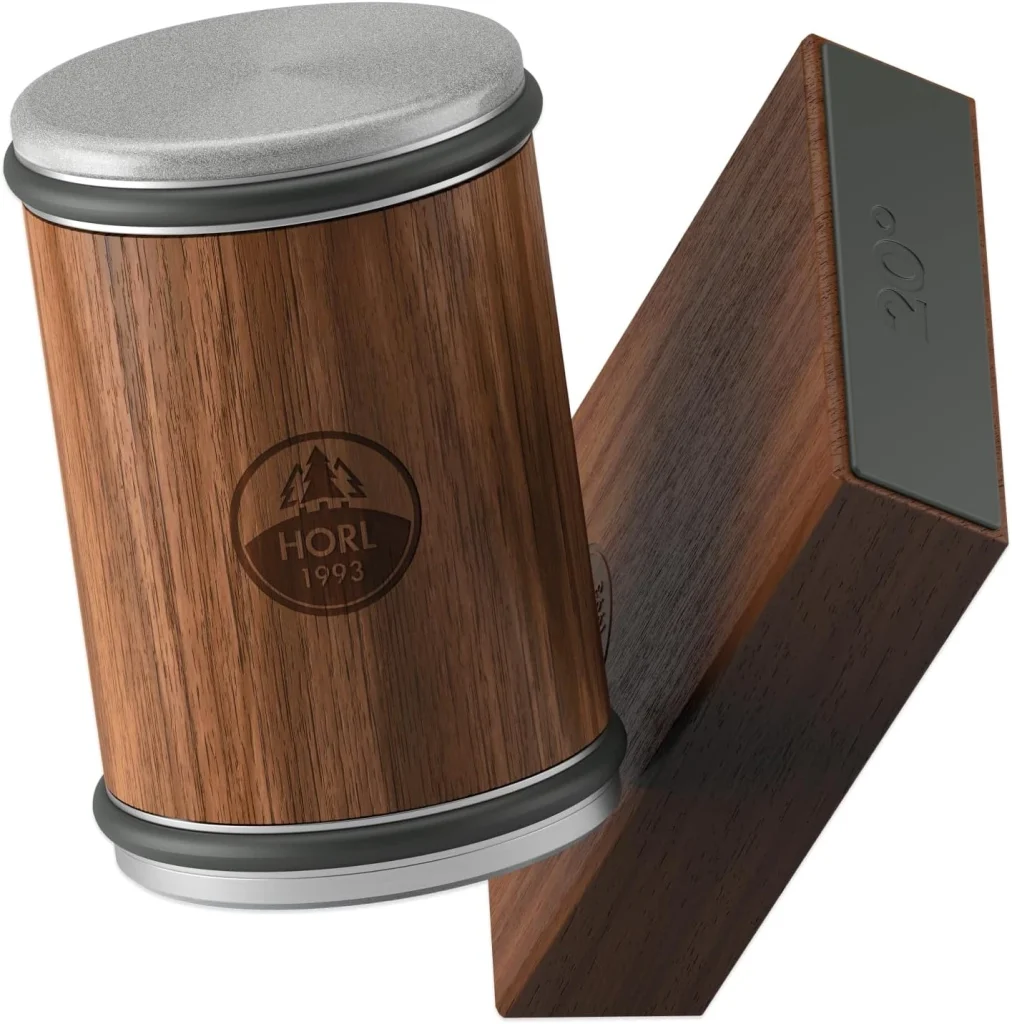
Best for: Home cooks who want a guided manual sharpening system.
The HORL 3 takes a different approach from traditional pull-through sharpeners and whetstones. It uses a rolling cylinder with a diamond grinding disc and a separate magnetic angle support.
You place the knife against the magnetic support and roll the abrasive cylinder along the blade. The support offers two sharpening angles: 15 degrees and 20 degrees.
The standard HORL 3 includes a diamond grinding disc for sharpening and a ceramic honing disc for refining the edge. This makes it a more complete setup than a basic rolling sharpener.
What makes it worth considering?
The main attraction is the guided process. The magnetic support helps keep the knife at a consistent angle, while the rolling cylinder moves along the blade.
This can make sharpening feel more approachable than using a traditional whetstone, especially for people who want a manual system but do not want to estimate the angle throughout the process.
The two angle options also offer some flexibility. HORL describes the 20-degree setting as suitable for robust everyday blades, while the 15-degree setting is intended for finer edges on suitable knives.
Pros
- Guided rolling sharpening system
- Two sharpening angle options
- Diamond grinding disc
- Ceramic honing disc on the standard HORL 3
- No electricity required
- Compact and visually distinctive design
Cons
- More expensive than many basic manual sharpeners
- Requires a suitable flat working surface
- The magnetic support must hold the knife securely
- Not suitable for every blade shape or edge geometry
- Premium features may be unnecessary for someone with basic kitchen needs
Who should buy it?
Consider the HORL 3 if you prefer manual sharpening but want more guidance than a traditional whetstone provides. It may appeal to people who value a consistent angle and a well-designed sharpening system.
However, its price is difficult to justify if you only need an inexpensive tool for occasional sharpening. A basic manual sharpener may be enough for that purpose.
Our take: An interesting premium alternative for people who want a guided manual system. Compare its price and features with an electric sharpener before deciding.
Electric vs. Manual vs. Whetstone vs. Rolling Sharpeners
Before choosing a product, it helps to understand the main sharpening methods. They have different learning curves, levels of control and maintenance requirements.
| Type | Main advantage | Main drawback | Best suited to |
|---|---|---|---|
| Electric | Convenient and guided | Higher cost and less flexibility | Busy home cooks |
| Manual pull-through | Simple and compact | Limited control | Basic kitchen maintenance |
| Whetstone | Greater control | Requires practice | Interested and patient users |
| Rolling | Guided angle with manual operation | Premium price on some models | People who want guided manual sharpening |
Which type is easiest for beginners?
For most beginners, an electric or simple manual sharpener is easier to understand than a whetstone. Both reduce the amount of technique involved, although you still need to follow the manufacturer’s instructions.
A rolling sharpener can also be approachable because its angle support helps guide the process. A whetstone offers more control, but learning to maintain a consistent angle takes time.
There is no single best method for everyone. Think about how often you cook, what knives you own and how much effort you are willing to put into sharpening.
How to Choose the Best Knife Sharpener for Your Kitchen
A sharpener should match your knives, not the other way around. Before buying one, consider these factors.
1. Check your knife’s sharpening angle
Sharpening angle affects how an edge performs. A lower angle can produce a finer cutting edge, while a wider angle can provide more durability for some knives.
However, changing the angle simply because a sharpener offers a different setting is not always a good idea. Check your knife manufacturer’s recommendations before changing its existing edge geometry.
For example, the Chef’sChoice 15XV is designed to convert compatible 20-degree edges to a 15-degree Trizor XV edge. The HORL 3 offers 15- and 20-degree settings. These options are useful, but they are not interchangeable recommendations for every knife.
2. Consider the type of knives you own
A sharpener that works well for a standard Western chef’s knife may not be appropriate for a single-bevel Japanese knife or a specialty blade.
Before purchasing, check whether the manufacturer lists your knife type as compatible. Pay particular attention to serrated knives, single-bevel knives and blades with unusual shapes.
If you are unsure about an expensive knife, consult the knife manufacturer or a professional sharpening service instead of experimenting with an unfamiliar sharpener.
3. Think about how much time you want to spend
If you want quick, straightforward maintenance, an electric sharpener may be the better option.
If you only sharpen occasionally and want to keep costs down, a manual sharpener may be sufficient.
If you enjoy learning a skill and want more control, a whetstone is worth considering. Just remember that the learning process is part of the purchase.
4. Look at the abrasive material
Different sharpeners use different abrasive materials and designs. Diamond abrasives are commonly used for efficient sharpening, while ceramic surfaces are often used for honing or refining an edge.
Abrasive type alone does not tell you whether a sharpener is suitable for your knife. The sharpening angle, design, technique and compatibility guidance all matter.
5. Consider maintenance and replacement parts
Some sharpeners have replaceable discs or belts, while others are simple tools with fewer parts.
For electric models, check whether replacement abrasives are available and how much they cost. For whetstones, consider care and flattening requirements. For rolling systems, check how the abrasive discs are cleaned or replaced.
A low purchase price does not always mean the lowest long-term cost.
How Often Should You Sharpen Kitchen Knives?
There is no fixed schedule that works for every kitchen knife. How often you sharpen depends on how frequently you cook, the type of steel, the cutting surface and how you use the blade.
A knife used every day on a hard cutting board may lose its edge faster than one used occasionally on a suitable wooden or plastic board.
Instead of sharpening simply because a certain number of weeks have passed, pay attention to how the knife cuts. If it struggles with ordinary tasks such as slicing a tomato or cutting through an onion cleanly, it may need maintenance.
Avoid sharpening more often than necessary. Sharpening removes metal from the blade, so unnecessary sessions can shorten the knife’s useful life.
Honing vs. Sharpening: What Is the Difference?
These terms are often used as if they mean the same thing, but they describe different maintenance tasks.
Honing helps realign or refine an edge that has become slightly misaligned through use. It generally removes little material compared with sharpening.
Sharpening removes material from the blade to create a new cutting edge. It is the process used when a knife has become too dull for ordinary honing to restore its performance.
A honing rod or ceramic honing tool can help maintain an edge between sharpening sessions, but it cannot replace sharpening when the blade is genuinely dull.
Common Knife Sharpening Mistakes to Avoid
Even a good sharpener can produce poor results if it is used incorrectly. Keep these mistakes in mind:
- Using the wrong angle: Check the knife manufacturer’s recommended edge geometry before sharpening.
- Applying too much pressure: Follow the sharpener’s instructions rather than forcing the blade through.
- Sharpening too frequently: Every sharpening session removes some material from the blade.
- Ignoring compatibility: Not every sharpener is suitable for serrated, single-bevel or specialty knives.
- Using a damaged or unstable setup: Keep the sharpener secure and follow the manufacturer’s safety instructions.
- Neglecting cleaning: Metal particles and sharpening residue can build up, so clean the tool as directed.
- Using the wrong cutting board: Very hard surfaces can contribute to faster edge wear. Choose a suitable wooden or plastic board.
If a knife is chipped, bent or badly damaged, routine sharpening may not be enough. A professional sharpening service may be the safer choice.
Frequently Asked Questions
Final Verdict: Which Knife Sharpener Should You Choose?
The best knife sharpener depends on how you cook and how much involvement you want in knife maintenance.
If convenience is your main priority, the Chef’sChoice 15XV is a strong electric option to consider, provided its 15-degree edge is suitable for your knives. If you prefer a compact electric system, the Work Sharp Culinary E2 offers a simpler approach.
For a lower-cost manual option, the KitchenIQ Edge Grip 2-Stage is worth considering for compatible everyday knives. If you want to develop a traditional sharpening skill, the Shapton Kuromaku 1000 is a sensible starting point. And if you prefer a guided manual system with a premium design, the HORL 3 offers a different way to sharpen.
You do not need the most expensive sharpener in the list. Choose one that works with your knives, fits your budget and feels practical enough that you will actually use it.
A sharp kitchen knife makes food preparation more pleasant. The best knife sharpener is the one that helps you maintain that edge safely and consistently.
Affiliate Disclosure
This article may contain affiliate links. If you purchase through one of these links, we may earn a commission at no additional cost to you. Affiliate relationships do not determine our recommendations. Our aim is to explain the advantages and limitations of each product so readers can make an informed decision.
Last reviewed: November 2026