Victorinox Chef Knives: Sizes, Models, Specifications and Buying Guide (2027)
A good chef’s knife should make everyday cooking easier. It should feel comfortable in your hand, cut cleanly through ingredients and handle most of the preparation work without making you reach for another knife every few minutes.
That is one reason Victorinox Best chef knives have become popular with home cooks and professional kitchens alike. The Swiss brand offers several styles, from practical, lightweight knives designed for everyday use to heavier forged models with a more traditional feel.
But choosing one is not quite as simple as picking the first Victorinox knife you see. The brand sells different collections, blade lengths, handle designs and constructions. Two knives may look similar in a product photo but feel noticeably different when you use them.
This guide explains the main Victorinox chef knife ranges, compares three popular models, looks at available sizes and specifications, and helps you decide which one makes sense for your kitchen.
Are Victorinox Chef Knives Worth Buying?
For many cooks, yes. Victorinox is worth considering if you want a practical kitchen knife without paying premium Japanese-knife prices.
The brand’s biggest strength is its range. The Fibrox collection focuses on straightforward performance and a functional grip. Swiss Classic offers a lighter, colourful alternative for everyday cooking. Grand Maître takes a different approach, with forged construction and a more substantial feel.
There isn’t one Victorinox chef knife that is automatically best for everyone. A cook who wants a lightweight knife for daily chopping may prefer a different model from someone who likes a heavier blade with a traditional balance.
Here is a quick look at three models worth comparing:
| Model | Blade length | Weight | Construction | Best suited to |
|---|---|---|---|---|
| Fibrox Chef’s Knife 5.2063.20BK | 20 cm / 8 in | 182 g | Stamped | Everyday cooking and practical use |
| Swiss Classic Chef’s Knife 6.8063.20B | 20 cm / 8 in | 160 g | Stamped | Cooks who prefer a lighter knife |
| Grand Maître Chef’s Knife 7.7403.25G | 25 cm / 10 in | 307 g | Forged | Those who prefer a longer, heavier knife |
Specifications are for the particular models listed. Other versions, sizes and regional listings may differ.
1. Victorinox Fibrox Chef’s Knife
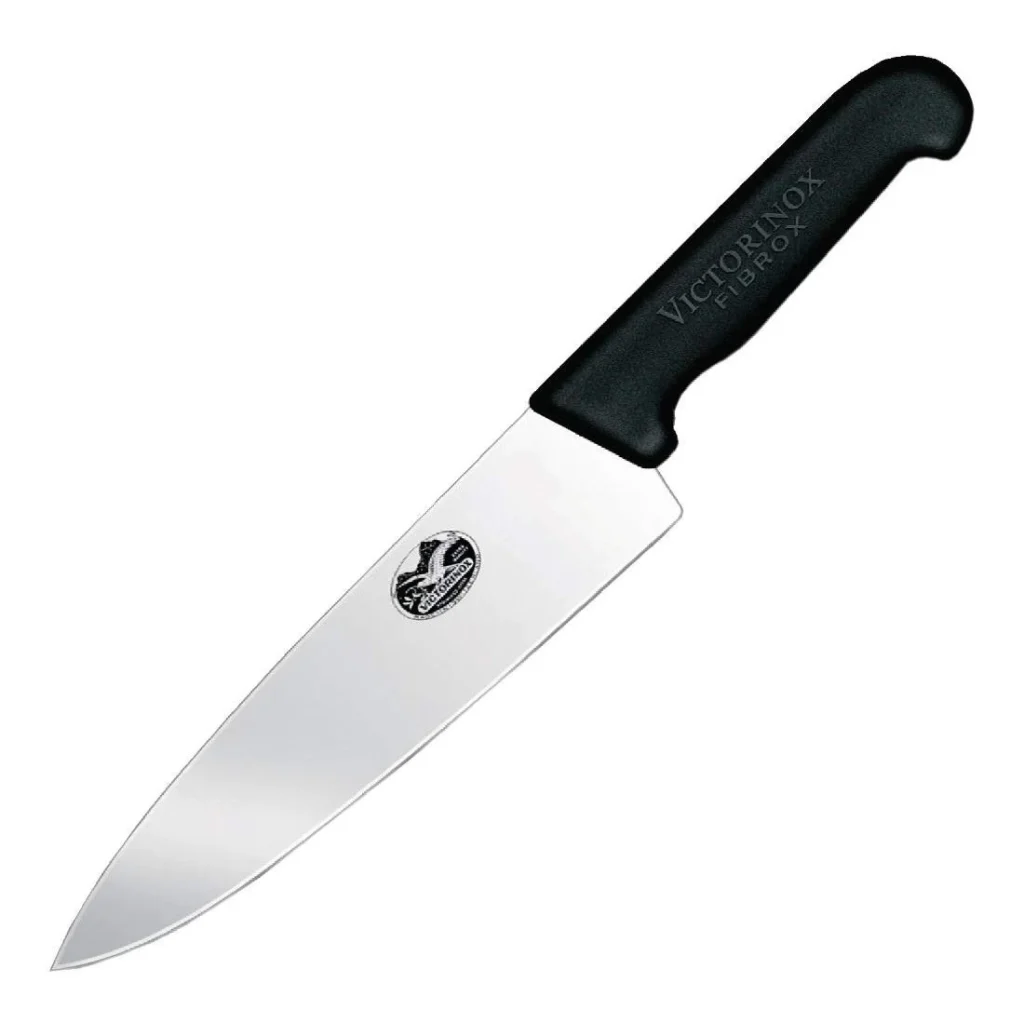
The Victorinox Fibrox Chef’s Knife is one of the brand’s best-known practical kitchen knives. It is designed around function rather than decoration, with a synthetic handle and a lightweight blade that is suitable for regular food preparation.
<em>Who should consider it?</em> Home cooks, busy kitchens and anyone who wants a straightforward chef’s knife without an elaborate handle or heavy construction.
What makes the Fibrox different?
The Fibrox handle is made from thermoplastic elastomer (TPE). It has a textured, practical feel and is designed to provide a secure grip during normal kitchen work.
The 20 cm version is a useful all-round size. It is long enough for chopping vegetables, slicing meat and handling larger ingredients, while remaining manageable for many home cooks.
Its stamped construction also contributes to its relatively light weight. At 182 g for the listed 20 cm model, it is not an especially heavy knife.
Fibrox 20 cm specifications
| Specification | Details |
|---|---|
| Model number | 5.2063.20BK |
| Blade length | 20 cm / 8 in |
| Overall length | 340 mm |
| Weight | 182 g |
| Construction | Stamped |
| Handle material | TPE |
| Country of origin | Switzerland |
| Dishwasher safe | Yes, according to the product listing |
What is it like for everyday cooking?
A 20 cm Fibrox is a sensible choice for common kitchen tasks. You can use it to chop onions, slice tomatoes, cut boneless meat, prepare herbs and break down larger vegetables.
Its relatively low weight may appeal to cooks who dislike heavier knives. The handle is also more functional than decorative, which suits people who care more about everyday use than appearance.
There are trade-offs. The Fibrox does not have the visual finish or forged construction of the Grand Maître range. If you prefer a heavier knife or a more traditional appearance, you may want to compare the two before buying.
Consider the Fibrox if: you want a practical, lightweight chef’s knife for regular food preparation and don’t need a premium-looking finish.
2. Victorinox Swiss Classic Chef’s Knife
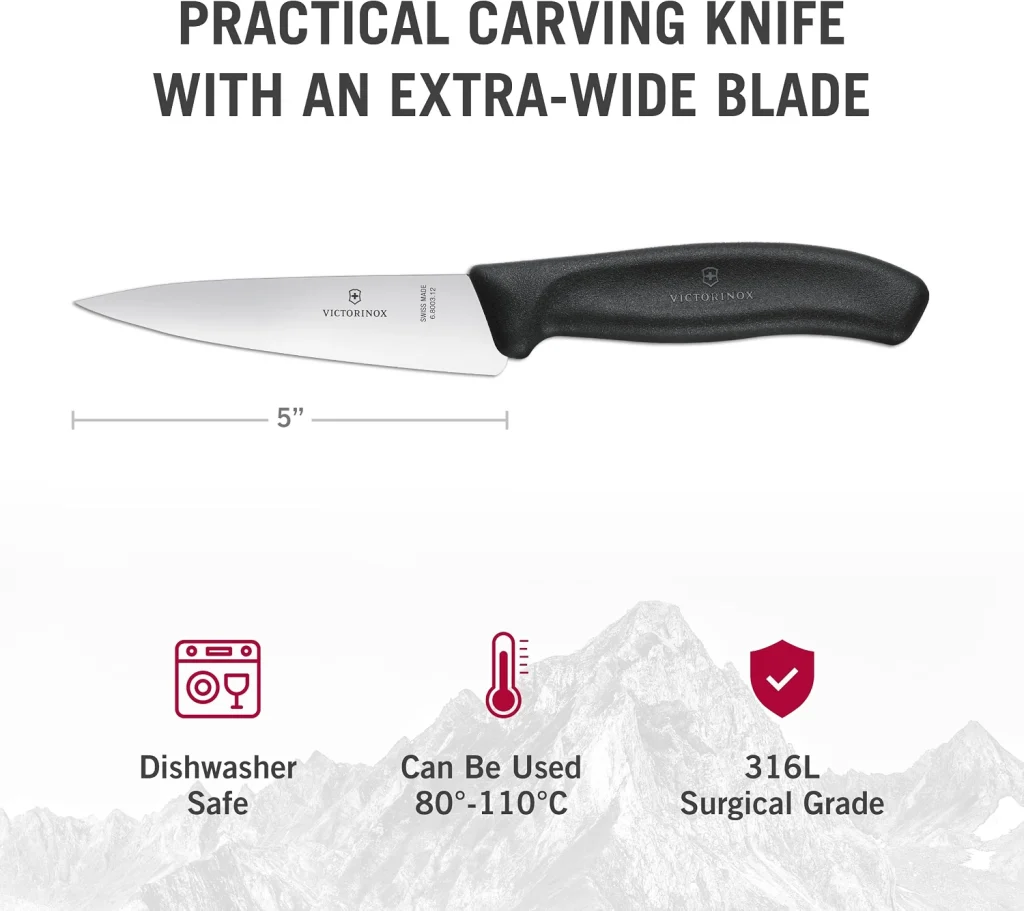
The Victorinox Swiss Classic Chef’s Knife is another lightweight option. It shares the practical approach of the Fibrox range but has a different handle design and overall appearance.
The 20 cm model weighs 160 g, making it lighter than the Fibrox 20 cm model listed above.
That difference may not sound significant on paper, but some cooks notice even small changes in weight and balance when preparing food regularly.
What makes Swiss Classic different?
Swiss Classic knives are known for their simple, lightweight design and synthetic handles. They are available in different colours and styles, making them a good option for people who want something more visually distinctive than a traditional black-handled kitchen knife.
The 20 cm chef’s knife is suitable for general food preparation, including chopping vegetables, slicing meat and preparing ingredients for everyday meals.
It is also worth remembering that a lighter knife is not automatically better. Some people enjoy the control and ease of movement that come with a lighter blade, while others prefer a little more weight behind the cut.
Swiss Classic 20 cm specifications
| Specification | Details |
|---|---|
| Model number | 6.8063.20B |
| Blade length | 20 cm / 8 in |
| Overall length | 344 mm |
| Weight | 160 g |
| Construction | Stamped |
| Handle material | TPE |
| Country of origin | Switzerland |
| Dishwasher safe | Yes, according to the product listing |
Who should choose Swiss Classic?
Swiss Classic is worth considering if you want a lightweight everyday knife with a simple design and a choice of handle colours.
Compared with the specific Fibrox model in this guide, it is 22 g lighter. That does not make it universally better, but it gives you a useful point of comparison if weight is important to you.
The handle design is also different, so it is worth considering how it feels in your hand rather than choosing based on appearance alone.
Consider Swiss Classic if: you prefer a lightweight knife, like its handle design and want a simple option for everyday cooking.
3. Victorinox Grand Maître Chef’s Knife
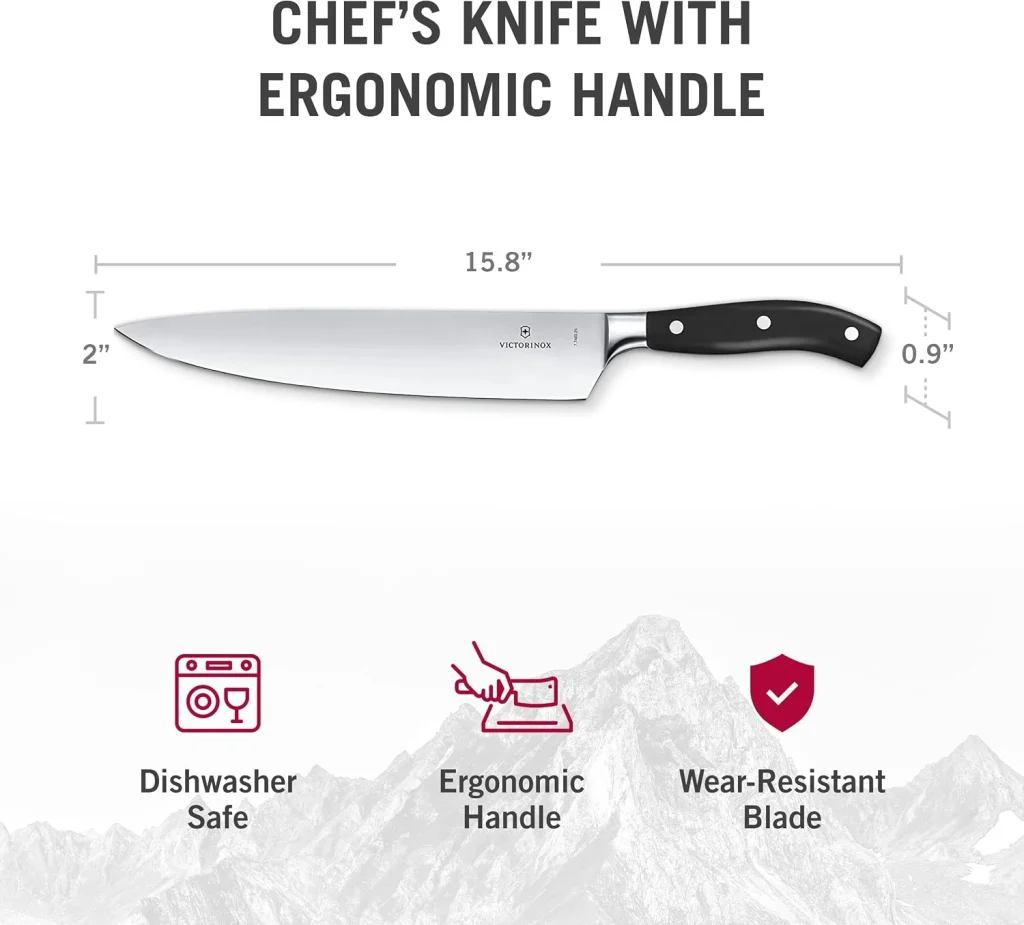
The Victorinox Grand Maître Chef’s Knife is different from the two ranges above. Rather than using stamped construction, the model discussed here is forged and has a more substantial build.
It is also considerably heavier. The 25 cm version weighs 307 g, compared with 182 g for the 20 cm Fibrox and 160 g for the 20 cm Swiss Classic models.
That makes it a better fit for people who actively prefer a larger, heavier knife. It is not necessarily the best choice for someone who wants a light and easy-to-manoeuvre blade.
What makes Grand Maître different?
The Grand Maître range is positioned differently from the more practical Fibrox and Swiss Classic collections. Its forged construction and larger proportions give it a more traditional, substantial feel.
The particular 25 cm model has a POM handle. POM is a durable synthetic material commonly used in kitchen-knife handles.
One detail worth knowing before buying: the listed 25 cm model is made in Germany, while the Fibrox and Swiss Classic models discussed in this guide are made in Switzerland. The country of manufacture can vary across a brand’s product range, so check the specific model listing rather than assuming all Victorinox knives are made in the same country.
Grand Maître 25 cm specifications
| Specification | Details |
|---|---|
| Model number | 7.7403.25G |
| Blade length | 25 cm / 10 in |
| Overall length | 401 mm |
| Weight | 307 g |
| Construction | Forged |
| Handle material | POM |
| Country of origin | Germany |
| Dishwasher safe | Yes, according to the product listing |
Is a 25 cm chef’s knife too large?
It depends on your cooking habits and the size of your workspace.
A 25 cm blade offers a longer cutting edge, which can be useful when slicing larger ingredients or working with bigger quantities of food. However, it takes up more space on the cutting board and may feel less convenient if you have a small kitchen or prefer shorter knives.
The additional weight is another consideration. Some cooks like the feeling of a substantial knife, while others find a lighter blade easier to control during long preparation sessions.
Consider Grand Maître if: you prefer a larger, heavier chef’s knife and specifically want forged construction.
Victorinox Chef Knife Sizes: Which Length Should You Choose?
Victorinox chef knives are available in different blade lengths, although availability depends on the collection and market.
The most important thing is to choose a size that suits your cutting board, kitchen space and cooking habits. A longer blade is not automatically more useful.
Here is a practical guide to common chef knife lengths:
| Blade length | Approximate size | Best suited to |
|---|---|---|
| 15 cm | 6 in | Small kitchens and lighter preparation tasks |
| 18 cm | 7 in | Everyday cooking with a little more cutting space |
| 20 cm | 8 in | General-purpose kitchen use |
| 22 cm | 8.7 in | Cooks who prefer a longer cutting edge |
| 25 cm | 10 in | Larger ingredients and users comfortable with longer knives |
15 cm: A compact option
A 15 cm chef’s knife can be easier to handle if you have a small cutting board or prefer shorter blades. It is useful for smaller vegetables, fruit and everyday preparation.
However, it may feel limiting when slicing larger ingredients or chopping substantial quantities of food.
18 cm: A useful middle ground
An 18 cm knife gives you more cutting length than a compact model without feeling as large as a 20 or 25 cm blade.
It can be a good compromise for home cooks who want a manageable knife but still need enough blade length for regular preparation.
20 cm: The all-round choice
For many kitchens, 20 cm is a sensible starting point. It provides enough cutting length for most everyday jobs without being excessively large.
If you are buying your first full-size chef’s knife and do not have a strong preference, this is a good size to consider.
22 cm: For cooks who want more blade length
A 22 cm blade offers extra cutting space and may appeal to people who regularly prepare larger ingredients.
It is worth checking the overall dimensions and handling characteristics of the particular model, as two knives with similar blade lengths can feel different.
25 cm: A larger, more substantial knife
A 25 cm knife is best suited to people who are comfortable working with a longer blade. It can be useful for larger cutting tasks, but it may be awkward on a small cutting board.
If you are unsure, try handling a knife of this size before buying one.
Victorinox Fibrox vs Swiss Classic vs Grand Maître
These three ranges serve different preferences. The best choice depends on what you value most: weight, construction, handle design or blade length.
| Feature | Fibrox | Swiss Classic | Grand Maître |
|---|---|---|---|
| General design | Practical | Lightweight and simple | More traditional and substantial |
| Construction of models discussed | Stamped | Stamped | Forged |
| Handle material | TPE | TPE | POM |
| Example blade length | 20 cm | 20 cm | 25 cm |
| Example weight | 182 g | 160 g | 307 g |
| Country of manufacture of example | Switzerland | Switzerland | Germany |
| Best reason to consider it | Practical everyday use | Lower weight | Forged construction and heavier feel |
Which one is the best value?
Value depends on the price you find and how well the knife suits your needs. A more expensive knife is not automatically a better purchase if its size or weight does not suit your cooking style.
For a practical everyday knife, compare the Fibrox and Swiss Classic first. If you prefer a heavier forged knife and like the larger 25 cm size, then Grand Maître deserves a closer look.
Before purchasing, compare the exact model number, blade length, weight and current price. Retailer listings sometimes use similar product names for different versions.
What About Victorinox Knife Steel?
Steel is an important part of any kitchen knife, but it is easy to make misleading comparisons when product information is incomplete.
Victorinox describes its kitchen knives as stainless-steel knives. However, the official product listings for the three specific models discussed above do not clearly identify an exact steel grade.
For that reason, it would be inaccurate to assign a particular steel designation to these models without reliable model-specific documentation.
When comparing knives, look beyond the steel name alone. Edge geometry, sharpening, blade thickness, heat treatment and maintenance all influence how a knife performs.
A knife that is easy to maintain and sharpen may be more useful in an everyday kitchen than one chosen only because its steel specification sounds impressive.
What Can You Use a Victorinox Chef’s Knife For?
A chef’s knife is designed to handle a wide range of kitchen preparation tasks. A suitable Victorinox model can be used for:
- Chopping vegetables: onions, carrots, peppers, cabbage and other everyday ingredients.
- Slicing meat: boneless meat and poultry, depending on the task.
- Preparing herbs: chopping parsley, coriander and similar ingredients.
- Cutting fruit: slicing apples, melons and other larger fruit.
- Dicing ingredients: preparing vegetables and other foods for cooking.
- General food preparation: handling many of the tasks that would otherwise require several different knives.
A chef’s knife is not designed for every job, though. Avoid using it to cut through bones, frozen food or hard materials. Those tasks can damage the edge and may make the knife unsafe to use.
How to Choose the Right Victorinox Chef Knife?
If you are still unsure which model to buy, focus on a few practical questions.
1. How long should the blade be?
Think about the ingredients you prepare most often and the size of your cutting board.
For general home cooking, 20 cm is a sensible starting point. If you have a smaller workspace or prefer shorter knives, consider a compact size. If you regularly prepare large ingredients and are comfortable with longer blades, a larger model may suit you.
2. Do you prefer a light or heavy knife?
This is one of the most noticeable differences between the examples in this guide.
The 20 cm Swiss Classic model weighs 160 g, while the 20 cm Fibrox weighs 182 g. The 25 cm Grand Maître weighs 307 g.
If possible, handle knives before buying. Weight and balance are personal preferences, and specifications alone cannot tell you exactly how a knife will feel in your hand.
3. Which handle feels comfortable?
A knife should feel secure and comfortable during normal cutting movements. Consider the handle’s shape, texture and size.
The Fibrox, Swiss Classic and Grand Maître models use different handle designs and materials. If you have smaller or larger hands, trying the knife in person can be particularly helpful.
4. Do you want stamped or forged construction?
The Fibrox and Swiss Classic examples in this guide use stamped construction. The Grand Maître example uses forged construction.
Forged construction may appeal to people who prefer a more substantial, traditional knife. However, stamped knives can be excellent everyday tools too. Construction type alone does not determine how well a knife will suit you.
5. What is your budget?
Prices vary by model, retailer and country. Compare the exact model number rather than relying on the collection name alone.
It is also worth checking whether the price includes a sheath or protective storage option, as well as the retailer’s return policy and warranty conditions.
How to Care for Your Victorinox Chef Knife?
Even a good kitchen knife needs proper care. A few simple habits can help maintain its cutting performance and condition.
Clean it after use
Wash the blade after preparing food, particularly after cutting acidic ingredients or raw meat. Dry it before putting it away.
The specific Fibrox, Swiss Classic and Grand Maître models listed in this guide are marked dishwasher-safe by Victorinox. However, hand washing is generally a gentler approach for maintaining a kitchen knife over time. It also reduces the risk of the blade knocking against other items during a wash cycle.
If your knife has a wooden handle, follow the manufacturer’s care instructions and avoid putting it in the dishwasher.
Use a suitable cutting board
Wooden and plastic cutting boards are generally better choices than glass, stone or ceramic surfaces.
Very hard surfaces can wear the cutting edge more quickly. A suitable board also makes everyday chopping more comfortable.
Keep the blade sharp
A dull knife requires more pressure and can be harder to control. Use an appropriate sharpening tool and follow the manufacturer’s guidance.
Sharpening frequency depends on how often you cook, what you cut and how you maintain the blade. There is no single schedule that works for every kitchen.
Store it safely
Avoid leaving a chef’s knife loose in a crowded drawer. A knife block, blade guard, magnetic strip or suitable knife storage system can help protect the edge and reduce the risk of accidental cuts.
Victorinox Chef Knife Warranty
Victorinox lists a lifetime warranty for the models discussed in this guide. However, warranty coverage is subject to the manufacturer’s terms and conditions.
Before purchasing, check the warranty information applicable to your country and retailer. Normal wear, damage caused by misuse and other exclusions may not be covered.
Keep your proof of purchase and check the official Victorinox warranty information if you need clarification about a particular issue.
Final Verdict: Which Victorinox Chef Knife Should You Buy?
Victorinox offers several useful options, but the best choice comes down to how you cook and what feels comfortable in your hand.
The Fibrox 20 cm is a practical choice if you want a straightforward everyday chef’s knife. The Swiss Classic 20 cm is worth considering if you prefer a lighter knife and like its handle design. The Grand Maître 25 cm is better suited to cooks who want a longer, heavier knife with forged construction.
If you are buying just one chef’s knife for a typical home kitchen, start by comparing the 20 cm Fibrox and Swiss Classic models. They offer a manageable size for a wide range of everyday tasks.
If you already know that you prefer a larger, heavier knife, take a closer look at Grand Maître.
Most importantly, don’t choose a knife based only on its collection name, price or appearance. Check the exact model, compare its specifications and, if possible, handle it before buying. A chef’s knife is something you may use almost every day, so comfort and suitability matter more than a long list of impressive-sounding features.